
The Illusion of Agreement: Why Art is a Business Tool
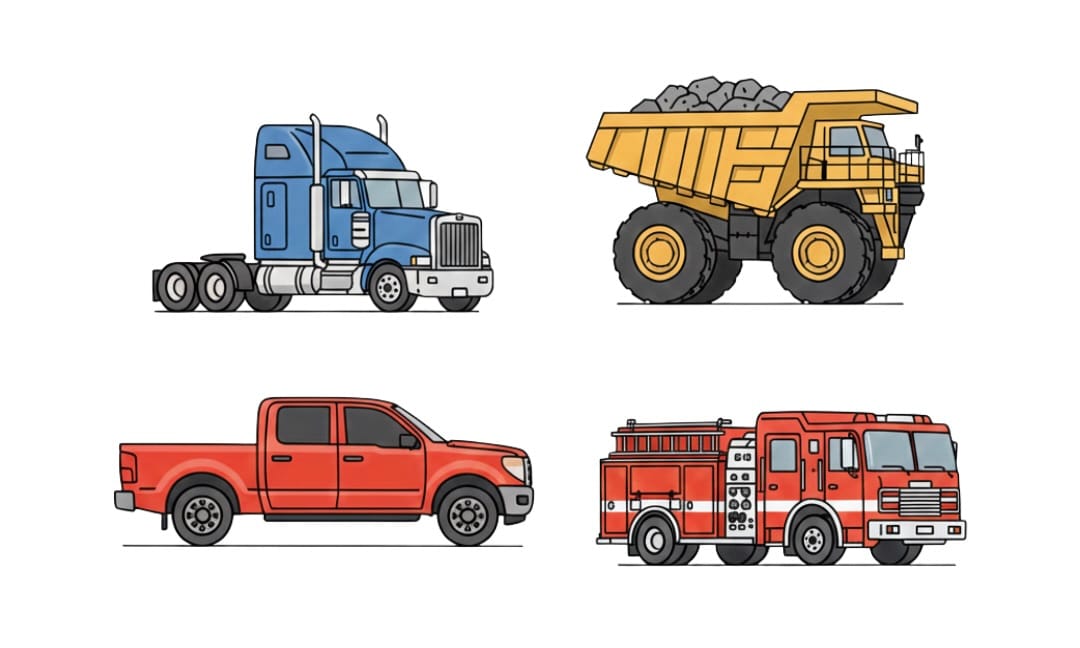
Quick exercise: Picture a "truck."
Do you have the image in your mind?
Okay, what did you see? Was it a Ford F-150 pickup? A massive 18-wheeler semi? A garbage truck? Or maybe a firetruck?
If we were in a meeting right now—engineers, designers, and PMs—and agreed to "build a truck," we would all be nodding our heads. We would think we were in sync. But in reality, our mental models are miles apart.
If I’m envisioning a semi-truck (logistics) and you’re envisioning a pickup (utility), we aren't actually agreeing. We are experiencing what is known in design circles as the Illusion of Agreement.
The Cmd+Tab Problem
In my career, I've spent a lot of time "Command-Tabbing" between different worlds.
- Tech: Wants clean code and scalable infrastructure.
- Art/Design: Wants usability and emotional resonance.
- Business: Wants market share and ROI.
The problem is that words are "semantic umbrellas"—they cover wide areas of meaning. When we rely solely on verbal descriptions, each "Tab" fills in the blanks with their own bias. The engineer assumes the infrastructure supports Y; the stakeholder assumes the feature includes X.
Everyone leaves the meeting happy. The disaster only happens three weeks later when the prototype is revealed and someone says, "Wait, that’s not what I meant."
Visualization as Disambiguation
This is why Human-Centered Design (HCD) frameworks like the LUMA System place such heavy emphasis on visualization.
In this context, Art is not decoration; it is a functional business tool.
We don't draw because we want things to look pretty. We draw to disambiguate. Visualization acts as a "forcing function" for specificity. You cannot draw a "general" truck. As soon as you put a marker to the whiteboard, you have to make a choice. You have to draw the wheels. You have to draw the cab.
By getting ideas out of our heads and onto a whiteboard, we transform abstract assumptions into concrete artifacts. The drawing becomes a "boundary object"—a neutral space where Tech, Art, and Business can finally see the same thing.
You Don't Have to Be an "Artist"
The biggest barrier to this is the fear of the blank page. People say, "I'm not creative," or "I can't draw."
But for the purpose of alignment, the fidelity of the drawing doesn't matter; the fidelity of the idea does.
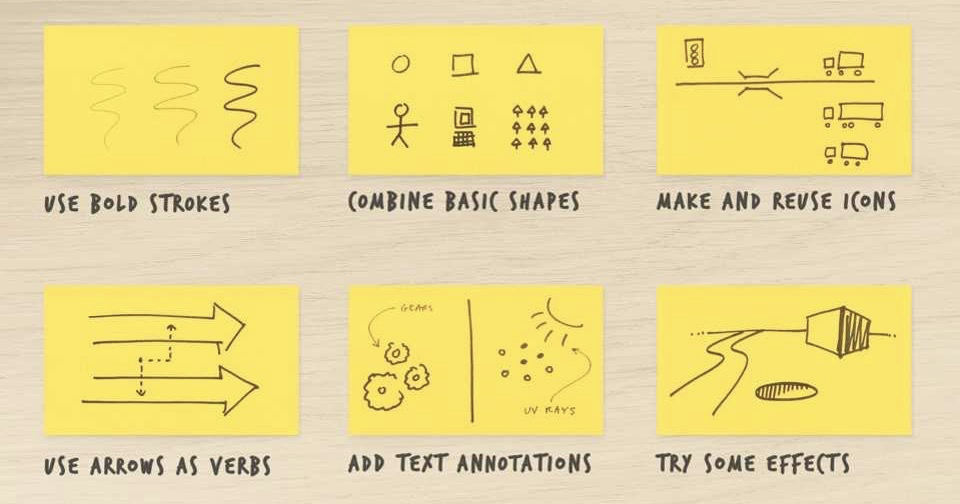
- Stick figures represent users.
- Squares and circles represent systems.
- Arrows represent value exchange and movement.
If you can draw those three things, you can visualize almost any complex problem.
The Takeaway
Next time your team reaches a quick verbal consensus, be the one to pause the celebration. Pick up a marker, go to the whiteboard, and say, "Let's just sketch that out to be sure."
It stops the endless context switching and puts everyone on the same screen. It might take five extra minutes now, but it will save you weeks of rework later.